When you first start exploring , it can feel like you’ve accidentally walked into a high-level coding seminar instead of a marketing meeting. Most business owners just want their website to show up when customers search for them, but the “under the hood” mechanics can be incredibly daunting.
In our experience, the foundation of a successful digital presence isn’t just about what people see on the screen, but how search engines perceive the structure of your site. We’ve seen businesses struggle with beautiful websites that simply don’t rank because they ignored the core search engine optimization essentials that govern how bots crawl and index pages. If the foundation is cracked, no amount of fancy content will keep the house standing.
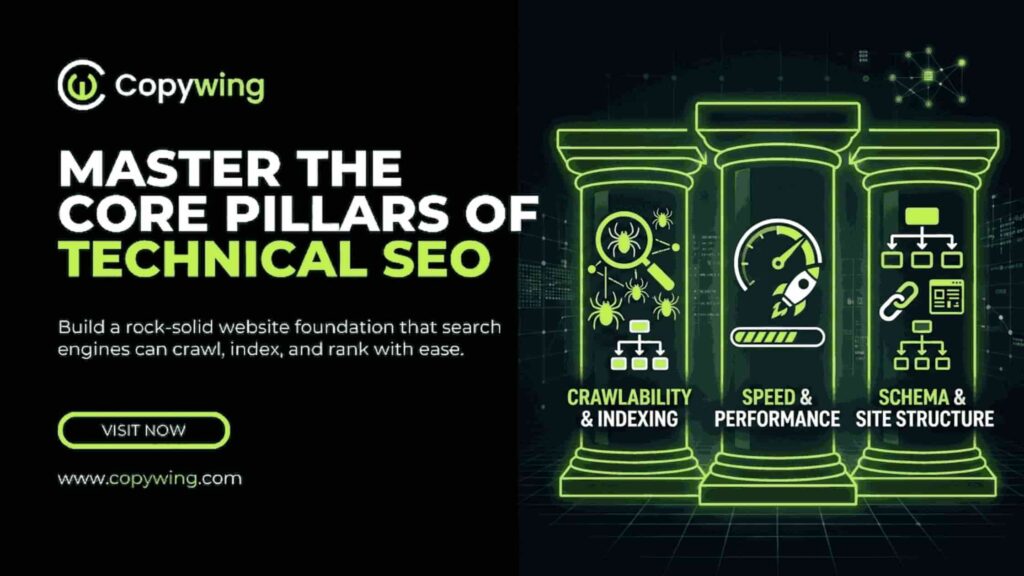
As you dive deeper into the world of site health, you’ll realize that mastering technical seo basics is the only way to ensure your hard work actually gets noticed by the right people. Once you hit that 100-word mark in your research journey, the jargon starts to fade away, revealing a simple truth: search engines want to provide a fast, secure, and logical experience for their users.
At Copywing, we’ve spent years helping brands bridge the gap between technical requirements and creative storytelling. It is vital to keep an eye on industry-leading benchmarks to ensure your site stays ahead of the competition. If your site is slow or hard to navigate, you’re essentially closing the door on potential customers before they even see what you have to offer.
Targeting Mistakes: Why Relevance Trumps Volume
One of the biggest hurdles we encounter involves how businesses choose what to rank for. It’s a classic case of aiming for the stars and missing the launchpad entirely.
The Allure of High-Volume Keywords
In our experience, many entrepreneurs get blinded by high search volumes. They see a keyword that gets 50,000 hits a month and think, “If I can just get 1% of that, I’m set.” But if that keyword is too broad, those visitors aren’t buyers—they’re just window shoppers. We’ve seen businesses struggle with “vanity rankings” where they sit at number one for a term that brings in zero revenue. It’s far better to be number one for a specific, niche term that describes exactly what you do.
Misinterpreting User Intent
Search engines are becoming incredibly good at understanding the “why” behind a search. Are they looking to buy, or just to learn? If your website provides a 2,000-word essay when the user just wanted a “buy now” button, your bounce rate will skyrocket. Aligning your technical structure to serve the specific intent of your audience is a non-negotiable part of modern marketing.
Ignoring Local Nuances
We often see companies trying to compete on a global scale when their bread and butter is right in their backyard. If you’re a local service provider, your site needs to scream “local” to the search bots. Failing to optimize for local maps and regional phrases is a missed opportunity that can take months to correct.
Not sure what’s going wrong with your current site traffic?
Our experts can help you identify the technical gaps holding your business back today.
Creative Mistakes: When Content and Code Don’t Match
Even if your site is technically sound, the way you present your message can make or break your success. The marriage of code and creativity is where the magic happens.
Over-Optimizing for Bots
We’ve seen businesses struggle with content that feels like it was written by a robot for a robot. If you repeat your keywords so often that the sentences don’t make sense to a human, you’ve lost the plot. The goal is to be helpful. In our experience, the most successful sites are those that speak naturally and solve real problems, while letting the technical structure handle the “talking” to Google.
Neglecting the Visual Experience
A site that takes ten seconds to load an image is a site that loses money. We often find that businesses upload massive, uncompressed photos that look great but kill the site’s performance. Balancing high-quality visuals with fast load times is a delicate dance, but it’s one that Copywing specializes in to ensure your brand looks professional without sacrificing speed.
Lack of a Clear Hierarchy
If your website is a maze, users will leave. A lack of clear headings and a logical flow makes it difficult for both humans and bots to understand what is important. Think of your site like a book; it needs a table of contents, clear chapters, and an easy way to navigate back to the start.
Budget Mistakes: The High Cost of “Cheap”
Perhaps the most painful errors we see involve how marketing dollars are allocated. Cutting corners in the digital world often results in a “cheap” debt that comes due later with interest.
Investing in the Wrong Tools
There are thousands of expensive software options out there, but having the most expensive tool doesn’t mean you have the best strategy. We’ve seen businesses struggle because they spent their entire budget on software and had nothing left for the actual people who know how to use it. Technology should support your team, not replace their expertise.
Chasing Quick Fixes
In our experience, any service promising “overnight results” or “guaranteed rankings” for a few dollars is usually using tactics that will eventually get your site banned. SEO is a marathon, not a sprint. Investing in a sustainable, long-term strategy might feel slower at first, but it builds an asset that grows in value over time, rather than a temporary spike that disappears the moment you stop paying.
Ignoring Maintenance
A website isn’t a “set it and forget it” project. It’s a living thing. Budgeting for ongoing updates, security patches, and content refreshes is essential. Many companies spend their whole budget on the launch and then wonder why their traffic starts to dip six months later. At Copywing, we advocate for a consistent, measured approach to budget management that ensures long-term health.
Building a Path to Growth
Mastering the digital landscape is about more than just checking boxes. It’s about creating a holistic experience that values the user’s time and provides genuine solutions to their problems. By avoiding common pitfalls in targeting, creativity, and budgeting, you position your brand as a leader in your space.
The journey might seem complex, but by focusing on the core principles of speed, relevance, and value, you can turn your website into your most powerful sales tool. It takes patience and a bit of a human touch to turn technical requirements into a thriving business.
Summary of Key Takeaways
To recap, your path to digital success involves:
- Choosing specific, high-intent keywords over broad, vanity terms.
- Balancing technical speed with human-centric, engaging content.
- Investing in long-term, sustainable strategies rather than “get-rich-quick” schemes.
- Maintaining a logical site structure that benefits both users and search bots.
If you are feeling overwhelmed, seeking specialized seo help for small business can provide the clarity and direction needed to stop guessing and start growing.
Ready to take the next step?
Contact our team today for a bespoke plan tailored to your unique business needs.
FAQs
How long does it take to see results from technical improvements?
Usually, you’ll notice changes in crawling and indexing within a few weeks. However, ranking improvements typically take 3 to 6 months to fully stabilize?
Do I need to be a coder to understand SEO?
Not at all. While knowing some HTML helps, most modern platforms handle the heavy lifting. You just need to understand the logic behind the settings?
Why is my site speed so important?
Users expect pages to load in under 3 seconds. If you’re slower, they leave, which signals to Google that your site isn’t a good result?
Can I fix my SEO mistakes myself?
Many basic issues like broken links or missing titles are easy to fix. For deeper structural problems, professional guidance is usually safer and faster?
Is mobile optimization still a big deal?
Yes, Google primarily uses the mobile version of your site for ranking. If your site looks bad on a phone, your rankings will suffer everywhere?